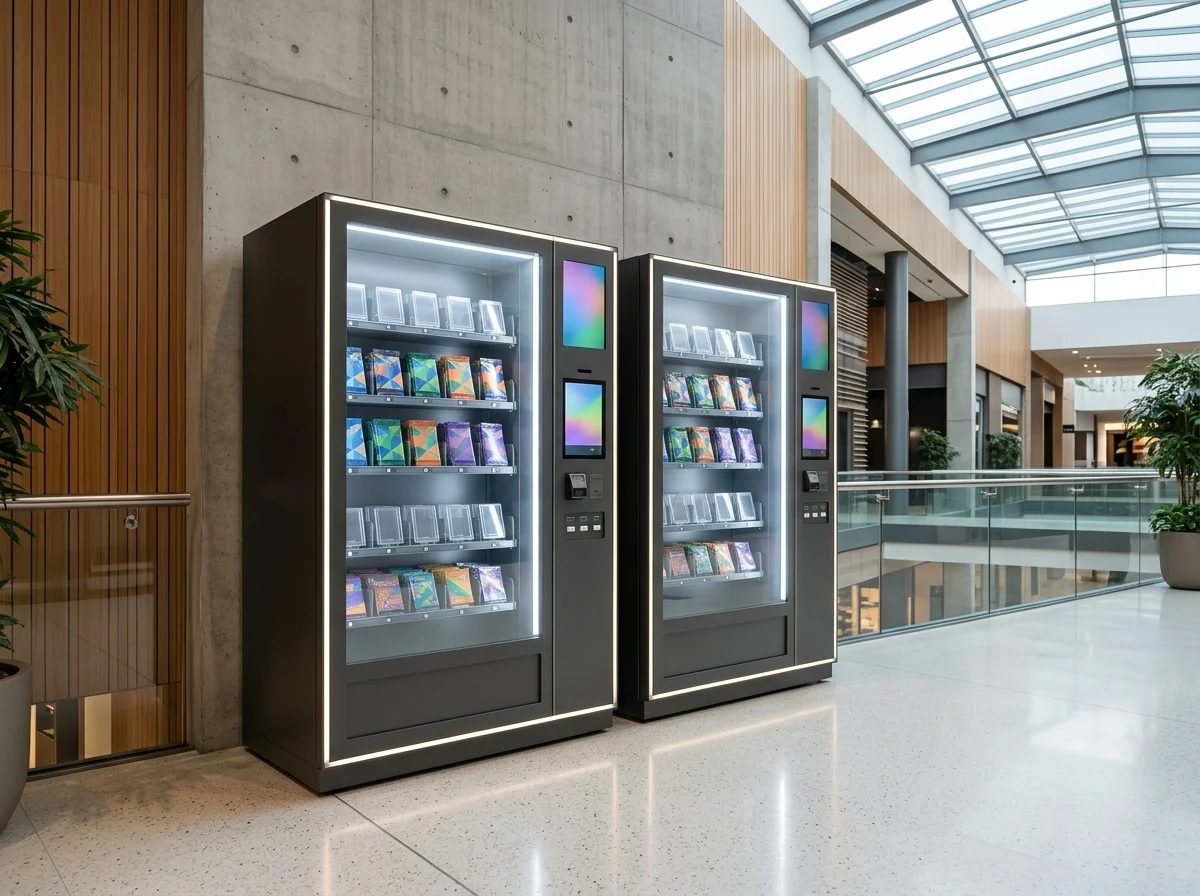
Matching Machine Footprint to Real Venue Footfall Before Ordering
The most expensive mistake new trading card vending operators make is buying hardware before verifying venue access, foot-traffic demographics, and merchandise supply lines. A single-cabinet floor elevator kiosk excels in a busy bowling alley or regional mall corridor, whereas a cramped neighborhood comic shop or cafe needs a 320 mm slim wall-mount unit that takes zero walkable floor area.
Use the venue-to-hardware matrix below to align each location class with the right cabinet tier from our five commercial models:
| Venue Type | Primary Buyer Behavior | Recommended Model | Typical Weekly Restock Pace | Key Placement Requirement |
|---|---|---|---|---|
| Regional Shopping Mall & Outlet Center | High weekend family/collector impulse footfall; multi-pack cart orders | TCG-DOUBLE-BAY or TCG-ELEV-60 | 1–2 visits/week | 36-inch corridor delivery clearance, mall COI insurance, 4G LTE external antenna |
| Family Entertainment Center, Arcade & Bowling Alley | Youth & collector dwell time; blend of boosters and collector tins | TCG-ELEV-60 | Weekly | Floor-bolt anchoring, laminated glazing, optional bill acceptor pocket |
| Independent Hobby Shop, Comic Store & Cafe | High collector conversion rate; limited floor space; after-hours impulse | TCG-WALL-24 or TCG-MINI-16 | Every 5–10 days | Two structural wall studs or steel floor pedestal; ADA reach height check |
| Sports-Card Lounge, Airport & Upscale Hotel | High-ticket PSA/BGS/CGC graded slabs and curated mystery boxes | TCG-SLAB-PRO | Weekly or bi-weekly | 2.0 mm steel shell, 10.76 mm PVB glazing, internal HD vend-audit camera |
| Weekend Card Shows & Pop-Up Conventions | Burst two-day transaction volume; zero booth-staff checkout queue | TCG-MINI-16 | Continuous booth top-up | 42 kg two-person SUV transport; 1,000 Wh LiFePO4 battery (~45 W draw) |
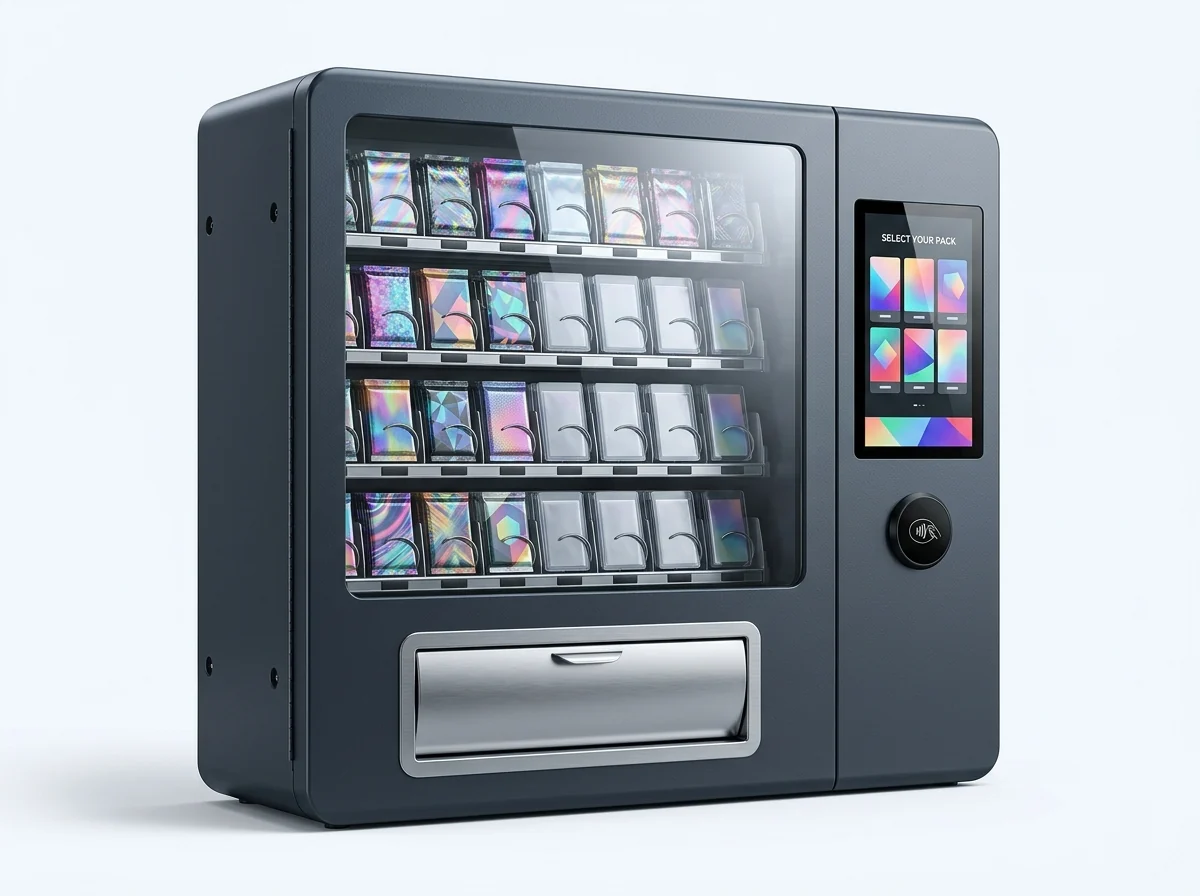
Five-Step Commercial Procurement & Site Launch Sequence
Step 1 — Validate Authentic Wholesale Merchandise Channels First
TCG Vend Systems manufactures unbranded commercial hardware only and does not supply trading cards, booster boxes, or graded slabs. Before placing a hardware deposit, secure reliable authorized retail, distributor, or secondary-market sourcing for authentic sealed booster packs, collector tins, and graded cards so your lanes stay stocked during high-demand set launches without relying on erratic retail shelf hunting.
Step 2 — Audit Site Power, Cellular Signal & Physical Clearance
Walk every prospective venue with a tape measure and smartphone signal meter before signing a placement agreement:
- Doorway & Freight Path: Verify a clear minimum 914 mm (36 in) doorway width, elevator weight capacity (if above ground floor), and zero un-ramped stair flights for 315–340 kg floor cabinets.
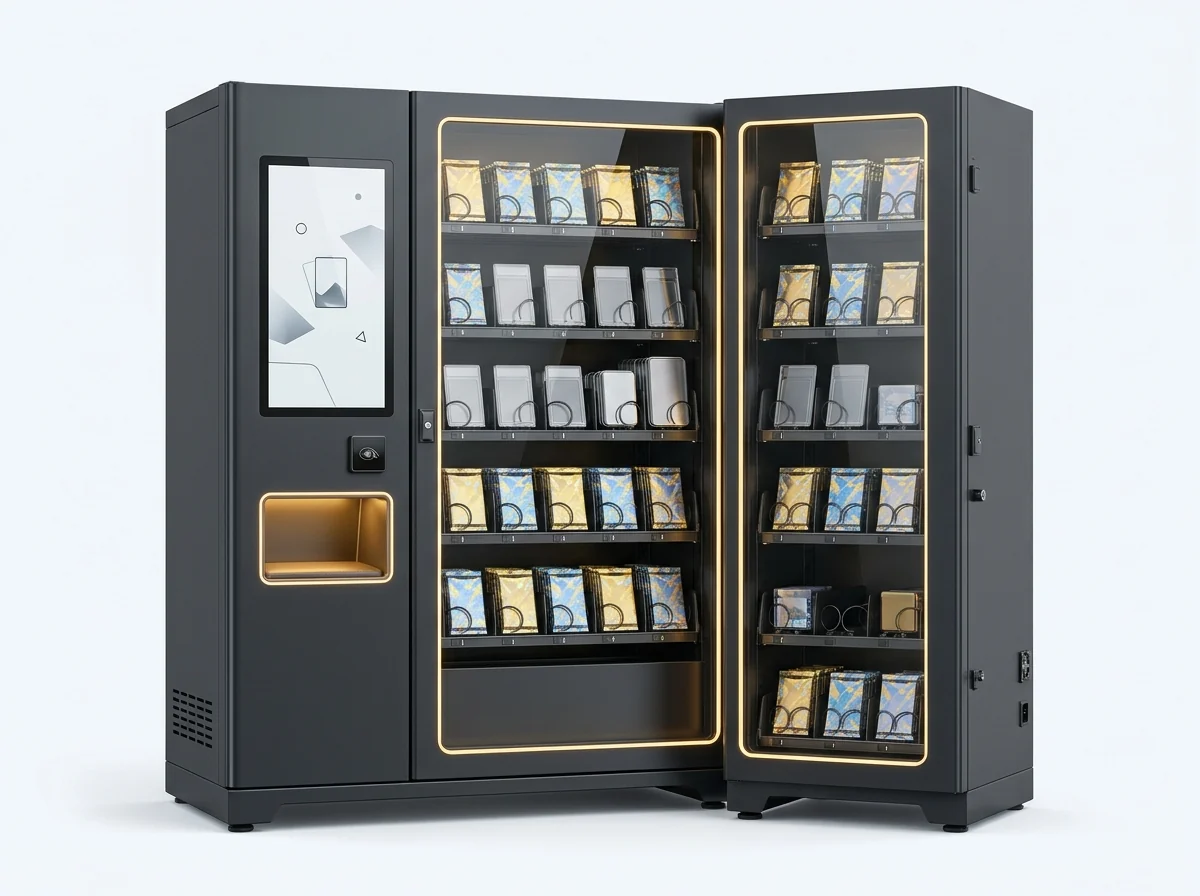
TCG-DOUBLE-BAYships as two separate bolted enclosures so it rolls cleanly through standard 36-inch mall service corridors. - Dedicated Electrical Receptacle: Confirm a grounded 110–120 V / 60 Hz (North America) or 220–240 V / 50 Hz (EU/UK/APAC) wall outlet within 1.5 meters of the cabinet rear panel. Peak draw stays at 45–520 W with no plumbing needed.
- Cellular Signal Strength: Mall concourses and concrete arcades frequently drop indoor LTE below -105 dBm. Test carrier signal directly at the placement wall; specify an external high-gain roof-mounted 4G LTE antenna or venue Ethernet drop whenever signal bars fluctuate.
- Environmental Humidity: Avoid direct sunlight onto viewing glass and check ambient humidity in coastal venues—adding an internal dehumidifier module keeps interior air inside the 45–60% RH preservation window.
Step 3 — Negotiate Clean Placement Agreements & Non-Infringing Branding
Host locations typically accept either a gross-revenue share (commonly 10–25% of net cashless sales) or a flat monthly license fee. Present the venue manager with a one-page hardware datasheet emphasizing:
- Unbranded neutral dark-slate powder-coated steel styling (or tasteful custom independent vinyl wrap—never unauthorized franchise logos or official Pokémon Center artwork; see Placement & Trademark Compliance Basics).
- Commercial general liability insurance (COI) naming the property owner as additional insured.
- Dual-beam optical drop verification and automated MDB refund logic so host store staff never handle customer payment disputes.
Step 4 — Configure Lane Widths & Test MDB Cashless Checkout Prior to Launch
Before rolling a new kiosk onto the sales floor, stage a 30-minute warehouse commissioning check:
- Index adjustable divider rails to your exact SKU widths (68–74 mm for standard 66 × 118 mm foil boosters, 85–92 mm for PSA/CGC/BGS slabs, 110–165 mm for tins and sealed boxes).
- Connect your activated Nayax VPOS Touch or Cantaloupe ePort terminal into the NAMA MDB harness, confirm DEX telemetry sync, and test both single-item vends and multi-item shopping-cart tap authorizations.
- Run at least two live optical test vends per active lane—especially on ultra-thin 20 g booster packs—to verify dual-beam drop confirmation and clean cushioned delivery.
Step 5 — Operate by Cloud Telemetry Rather Than Fixed Calendar Loops
Rigid weekly driving loops waste labor on slow sites while letting hot mall cabinets sit sold out on Saturday afternoon. Use cloud inventory thresholds to dispatch route visits only when top-performing lanes fall below your 20–25% safety stock buffer. If a single TCG-ELEV-60 drops below a seven-day service interval, bolt on the 48-lane expansion bay via the pre-wired RS-485 bus to upgrade into a 108-lane TCG-DOUBLE-BAY station without adding a second payment terminal fee.
Next steps for your rollout plan:
- Run your venue’s daily sales estimate through the TCG Vending Capacity & Restock Calculator.
- Audit hardware BOM tiers and freight drivers in the Commercial Cost Factors Guide.
- Review security glass, locks, and MDB reader wiring in Anti-Theft & Nayax Cashless Hardware or return to Master Technical Specifications.
Standard & Custom-Engineered Models
108-Lane Dual-Cabinet Modular Trading Card Vending Station
108-lane dual-cabinet station (1960×860×1940 mm) combining master elevator kiosk + slave display bay under one 21.5-inch touchscreen, single Nayax payment terminal, and cloud fleet portal.