Trading Card Vending Lane Capacity & Restock Cycle Estimator
Enter target daily pack/slab volume, average SKU depth per lane, and active lane count to calculate cabinet capacity, optimal restock interval, and recommended hardware tier.
How to Use the Lane Capacity & Restock Interval Estimator
Sizing a trading card vending machine solely on peak SKU count leads to undersized lanes that sell out of popular sets every 72 hours—or oversized dual-bay cabinets sitting half empty inside a low-footfall lobby. The interactive calculator above converts four operational inputs into actionable fleet-planning numbers:
- Estimated Daily Unit Sales (units/day): Total booster packs, sleeved singles, slabs, or tins sold across all lanes on an average day. Start conservative (8–18 units/day for neighborhood shops; 25–75 units/day for active arcades and regional malls).
- Active Merchandising Lanes: Matches our five production hardware classes—16 lanes (TCG-MINI-16), 24 lanes (TCG-WALL-24), 36 wide slab lanes (TCG-SLAB-PRO), 60 lanes (TCG-ELEV-60), or 108 lanes (TCG-DOUBLE-BAY).
- Average Pack or Slab Thickness (mm): Controls how many units stack cleanly inside a standard 136 mm usable lane push depth—typically 6–8 mm for standard foil booster packs, 3–4 mm for top-loaded singles, 6–10 mm for PSA/CGC/BGS graded slabs, and 65–95 mm for collector tins.
- Minimum Restock Safety Buffer (%): Reserve stock percentage kept in the cabinet when your cloud telemetry triggers a restock dispatch (20–25% prevents popular front-row lanes from going blank before your technician arrives).
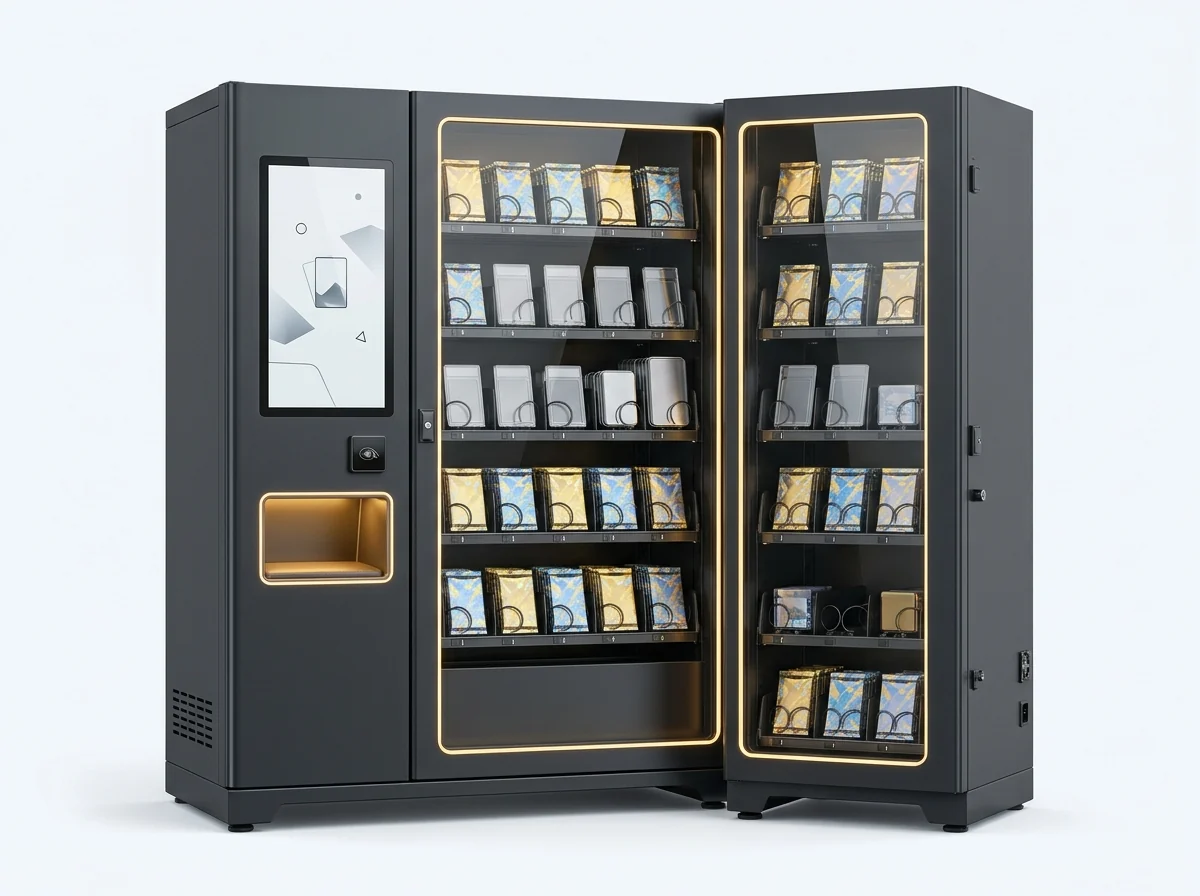
Real-World Lane Depth Reference by Collectible SKU Format
Because foil packaging thickness and rigid slab shells vary substantially across product lines, verify your true lane density using the engineering reference table below before finalizing your tray planogram:
| Collectible SKU Format | Average Depth Thickness | Est. Units per 136 mm Pusher Lane | 24-Lane Wall Capacity (TCG-WALL-24) | 60-Lane Floor Capacity (TCG-ELEV-60) | 108-Lane Station Capacity (TCG-DOUBLE-BAY) |
|---|---|---|---|---|---|
| Standard Foil Booster Pack (10–11 cards) | 6–8 mm | 17–20 packs | 408–480 packs | 1,020–1,200 packs | 1,836–2,160 packs |
| Sleeved Single in Rigid Top-Loader | 3–4 mm | 20–24 sleeves (capped for weight/feed) | 480 sleeves | 1,200 sleeves | 2,160 sleeves |
| PSA Graded Card Slab (6 mm) | 6–7 mm (with sleeve) | 16–18 slabs | 384 slabs* | 960 slabs | 1,728 slabs |
| BGS Graded Card Slab (10 mm) | 10–11 mm | 12–13 slabs | N/A (elevator recommended) | 720 slabs | 1,296 slabs |
| Mixed Planogram (70% Packs / 20% Slabs / 10% Tins) | Weighted ~9–11 mm | ~12–15 avg units | ~300–360 units | ~720–900 units | ~1,300–1,620 units |
*Note: Heavy acrylic graded slabs and thick BGS cases are best dispensed on elevator-equipped floor kiosks (TCG-ELEV-60, TCG-SLAB-PRO, or TCG-DOUBLE-BAY) rather than drop chutes.
Avoiding the “Pareto Stockout” Trap on High-Demand Sets
The formula usable_capacity ÷ daily_sales computes an average cabinet restock cycle assuming even demand across every lane. Real collectible traffic follows a steep Pareto curve: your top 20% of booster sets routinely generate 50–65% of daily transactions.
To keep best-selling lanes alive between weekly route visits without overstocking slow movers:
- Double-Face Top-Velocity Boosters: Assign 3 to 5 parallel lanes on Rows 1–2 to your fastest-selling expansion rather than dedicating 60 lanes to 60 completely different low-velocity SKUs.
- Set Lane-Level Cloud Thresholds: Configure your Nayax/cloud dashboard to alert when any single hero lane drops below 4 remaining units, rather than waiting for aggregate cabinet inventory to hit 20%.
- Use Modular Expansion When Service Drops Below 5 Days: If a single
TCG-ELEV-60demands twice-weekly emergency restocks, bolt on the 48-lane expansion bay (TCG-DOUBLE-BAY) to cut route driving labor roughly in half while keeping a single payment terminal subscription.
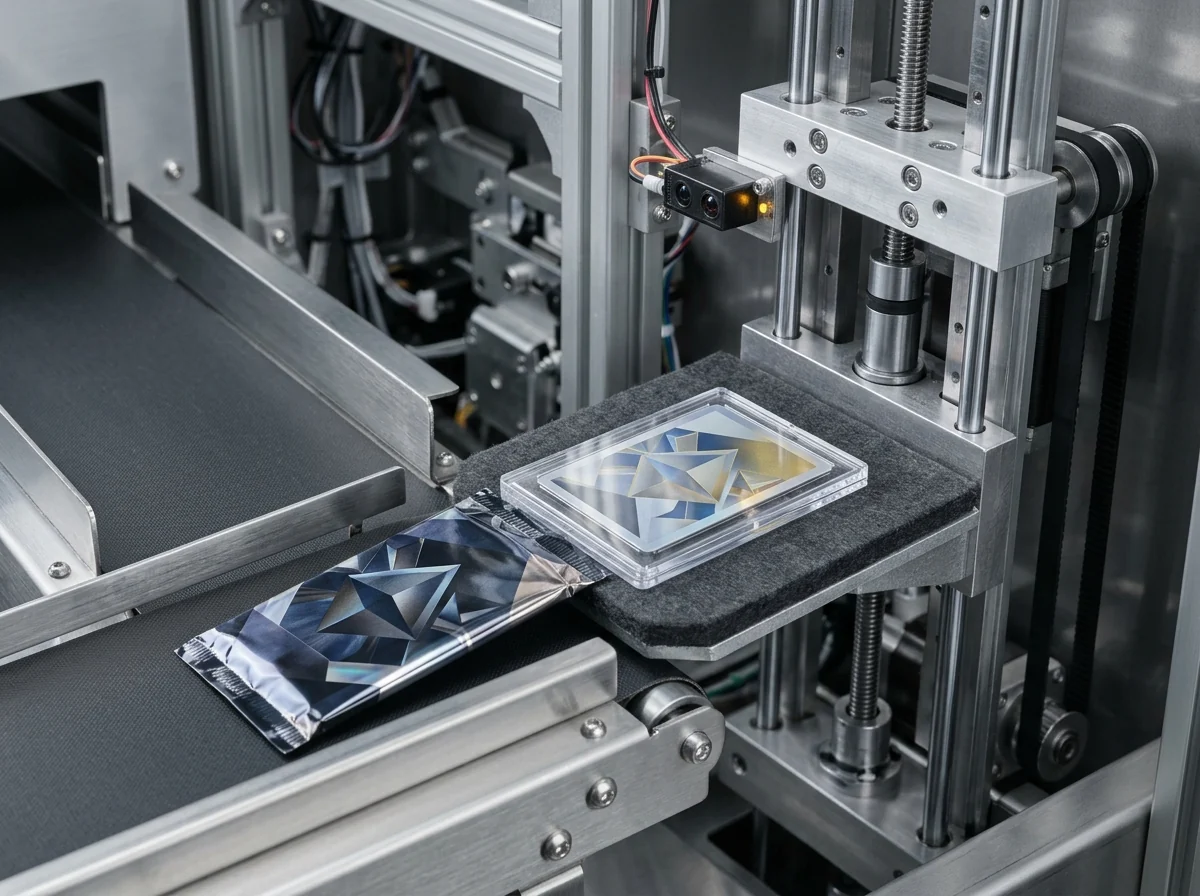
Next Engineering Guides Before Specifying Hardware
Once your capacity and restock math confirms the right cabinet tier, read our two focused engineering guides that prevent the most common mechanical and legal pitfalls in card vending:
- Mechanical Pack & Slab Protection: Read Preventing Bent Booster Corners & Cracked Slabs: Coil vs. Belt Elevator to understand why flat belts, straight pushers, and optical drop sensors outperform converted snack coils.
- Placement, Branding & Trademark Boundaries: Read Independent TCG Vending Hardware vs. Official Kiosks to review lease compliance, authentic inventory sourcing, and non-infringing cabinet signage rules.
You can also compare hardware BOM tiers in the Commercial Hardware Cost Guide, inspect complete specs on the Master Technical Specifications hub, or browse All Five Commercial Models.
Standard & Custom-Engineered Models
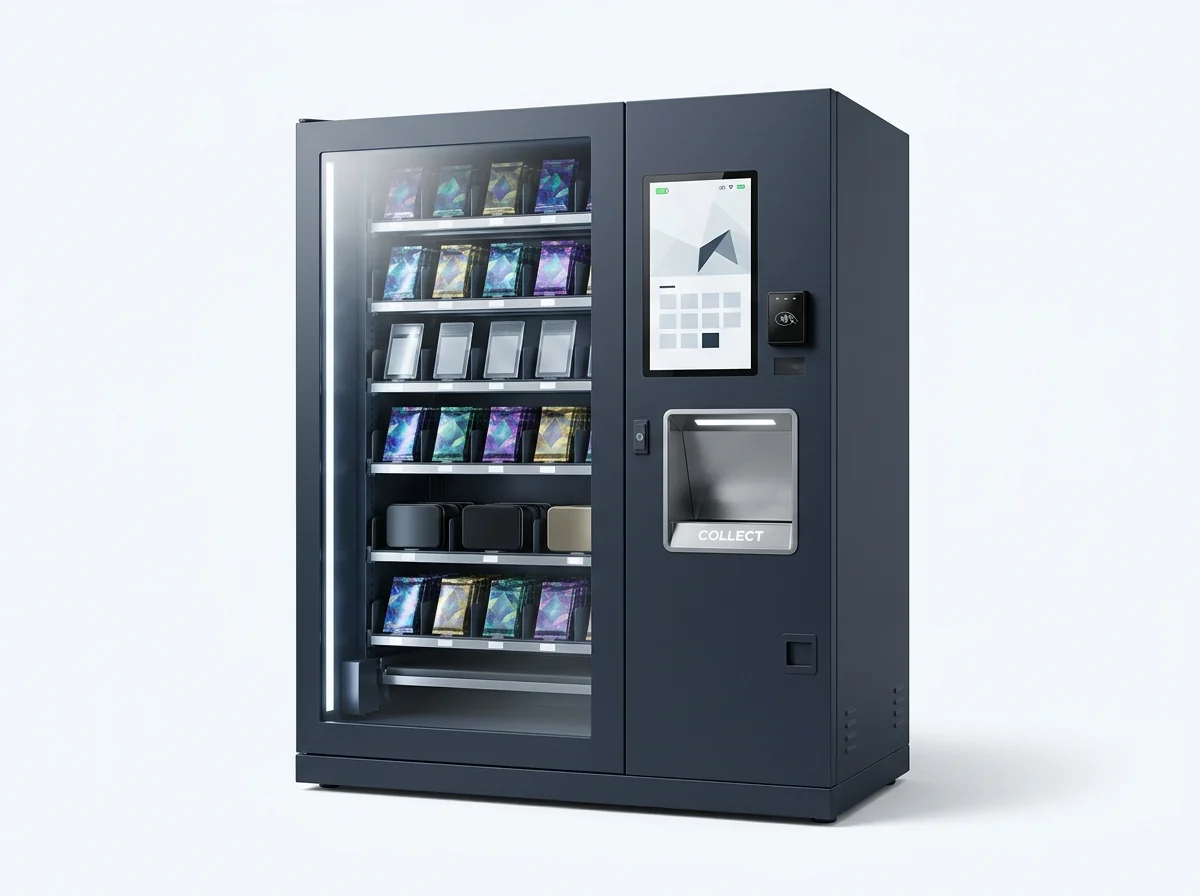
60-Lane Coil-Free Elevator Trading Card Vending Machine
60-lane floor-standing coil-free elevator vending kiosk (1180×860×1940 mm) with 21.5-inch HD touchscreen, laminated anti-theft glass, infrared drop sensors, and Nayax MDB cashless readiness.